
Calculating True Spending on No-Subscription OnlyFans Access
OnlyFans pages with no monthly base fee can still generate real charges through pay-per-view (PPV) messages, tips, and custom content, and those costs rarely announce themselves as clearly as a recurring subscription line. The goal here is to turn a vague sense of “I barely spend anything” into an exact monthly figure. BestOnlyFans is used as a ranking-methodology reference, not as a spending source.
The method is straightforward: itemize every payment stream, reconcile weekly and monthly, then compare the total against a fixed subscription. Readers who finish will have a repeatable tracking routine, not just a caution.

The Perception Gap in Zero-Dollar Subscriptions
A $9.99 subscription arrives as one recognizable charge, easy to recall and cancel. A free page arrives as nothing, so the mind records the relationship as costless even after several PPV unlocks have cleared the card.

Only the aggregate is meaningful, and the aggregate is exactly what nobody sees.

Three cognitive biases drive most of the gap between perceived and actual spending.
- Anchoring on the base price. The $0 signup becomes the reference point, so later charges are judged against zero instead of a realistic budget.
- Pain-of-paying decay. A saved card removes friction, and each unlock requires less conscious approval than the one before it.
- Mental accounting by page. Ten dollars across four pages feels like four small hobbies rather than one $10 expense.
Itemizing PPV Message Expenditure
A creator sends a locked message, the subscriber unlocks it, and the price is charged immediately with no recurring record attached. Unlock prices can run up to $50, so a few unlocks can outpace a year of modest subscriptions.

The fix is a purchase log with enough structure that patterns become visible rather than remembered. Four fields per entry are sufficient.
- Date of purchase. This reveals clustering – several unlocks in one week, or a pattern tied to specific days or late hours.
- Page or creator handle. Costs grouped by page show which relationships are genuinely expensive rather than merely enjoyable.
- Unlock price. The exact figure, not a rounded estimate; rounding is where totals quietly drift.
- Content type. A short label such as photo set, video, or bundle, so later comparisons can weigh value against price.
Tip: log the unlock price at the moment of purchase, not at the end of the day. Reconstruction from memory produces lower totals than reality, and the point of the log is accuracy.
A page costing $22 monthly in unlocks is functionally a $22 subscription that was never labeled as one.
Recording Tips and Custom Content Payments
Tips are voluntary and can reach $100, which makes them easy to dismiss as one-off generosity while they accumulate into the largest line on a monthly statement. Custom content adds a second stream, usually negotiated privately and paid as a lump sum.
The three streams differ in how hard they are to track, and knowing that helps set expectations for the routine.
| Payment Type | Typical Range | Tracking Difficulty |
|---|---|---|
| PPV message unlock | $3-$50 per unlock | Moderate – high frequency, small amounts, easy to forget individually |
| Standard tip | Varies by subscriber; can reach $100 | High – voluntary and unplanned, rarely recorded at all |
| Custom content quote | Negotiated per request | Low – large, memorable, usually a single payment |
| Paid chat message | Commonly $3-$5 per message | Moderate – per-message charges accumulate quickly in long conversations |
At $3-$5 per message, a long conversation can cost more than a month of subscriptions in one evening, and the individual messages never feel expensive.
The practical rule is to treat every outgoing payment as one of four types and log it accordingly. When all four sit in the same sheet, the monthly total stops being a surprise.
Awareness also has a security dimension. Subscribers who keep careful records notice unfamiliar charges sooner, the same habit that supports recognize and avoid phishing efforts when a fake payment notice arrives by email or direct message.
Weekly and Monthly Reconciliation Methods
Reconciliation is the scheduled habit of comparing the log against the actual payment method, and it works best tied to fixed calendar points.
- Weekly summary. Every seven days, total the week’s entries and note the largest single purchase. This catches escalation while the month can still be adjusted.
- Mid-month projection. Multiply the first-half total by two to estimate the full month. Projections surface problems earlier than month-end totals.
- Month-end total. Close the month, compare the log against the statement, and record the final figure that feeds the next section.
Discrepancies between log and statement are the most valuable output of the routine. A charge with no matching entry usually means a forgotten auto-renewal, or a purchase made in a hurry.

It helps to know the platform’s price-change rules too. When a creator raises the price, auto-renew stops, and existing access continues until the paid period ends, so an increase will not silently renew at the higher rate.
Comparing Accumulated Costs to Fixed Subscriptions
Fixed subscriptions range from $4.99 to $49.99 per month, with most paid pages clustering between $4.99 and $15 and averages landing around $5-$10. A free page costing $18 monthly in unlocks is more expensive than a typical paid subscription.
Four calculation steps turn a month of entries into a direct answer.
- Total all payments per page for the month. Include PPV, tips, custom content, and paid chat messages; a partial total flatters the result.
- Normalize promotional pricing. Promotional first months can fall below $4.99, for example a $3 first month, so compare like with like by checking the standard base price in month two.
- Place the total beside a comparable paid page. Use the $4.99-$15 typical range as the benchmark for the same type of content.
- Decide on the higher-value option. If the free-page total exceeds the comparable subscription price, the subscription is the clearer purchase; if not, the free page is working as intended.
For subscribers browsing smaller regional catalogs, the same arithmetic applies without modification, including when checking free onlyfans qatar listings and similar regional roundups. The label on the page does not change how the monthly total is calculated.
One structural detail explains why ranking sites exist: the platform has no built-in discovery feed or directory. Subscribers compare pages through third-party summaries, which is another reason to keep personal spending data separate from promotional descriptions.
Digital Tools and Manual Tracking Approaches
There is no single correct tool. The right choice is the one that survives a busy week, and each category trades convenience against privacy differently.
- Banking and card apps. Convenient and always current, but they show merchant totals rather than per-page detail, and cannot distinguish an unlock from a tip.
- Manual spreadsheets. Maximum control and full per-page granularity, with no third party involved. The cost is discipline: an unmaintained sheet is worse than none.
- Dedicated budgeting software. Automated categorization and reminders, usually at the price of granting account access to a third-party service.
A hybrid works well: keep the detailed log in a spreadsheet, then reconcile it monthly against the card app as an independent check.
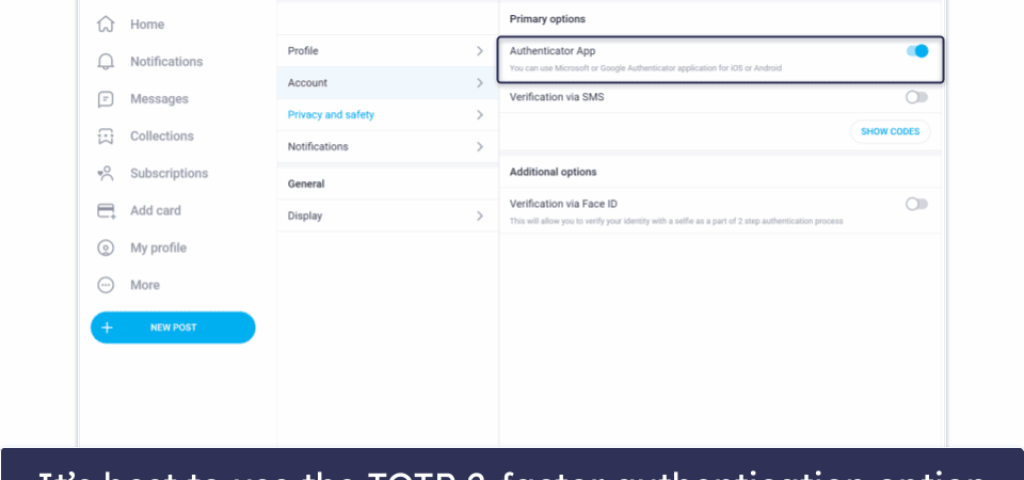
Two-step authentication on the platform account prevents someone else from generating charges that would appear in the log as unexplained entries, and it costs nothing to enable.

BestOnlyFans Price History as Benchmark Data
Individual logs answer “what did I spend?” They cannot answer “is that normal for this kind of page?” That is where aggregated price history becomes useful, supplying context a personal spreadsheet never will.
Using BestOnlyFans methodology as the reference point, the table below shows how aggregated categories translate into personal benchmarks.
| Data Category | Free-Page Application | Paid-Page Parallel |
|---|---|---|
| Base subscription history | Confirms the page has always been $0 and earns through PPV and tips | Shows the $4.99-$49.99 range and where typical pages sit within it |
| PPV density | Indicates how frequently locked messages are sent, predicting monthly unlock volume | Indicates how much content is bundled into the subscription instead |
| Earnings distribution | Suggests how reliant a page is on PPV and tips rather than subscriptions | Suggests how much of the creator’s income comes from the base fee |
| Platform fee context | Every payment, including unlocks and tips, carries the 20% platform fee | The same 20% applies, with the creator keeping 80% in both cases |
Read together, these categories let a subscriber compare a personal monthly total against the structure of the page itself. A page with high PPV density and low subscription reliance will almost always cost more through unlocks than a paid page with bundled content, even though the signup price suggests the opposite.
Benchmarks are descriptive, not prescriptive. They identify when a personal total sits far from the pattern, and the decision about what to do next stays with the subscriber.
Conclusion: Conscious Spending on Complimentary Tiers
Free access exists for a reason, letting subscribers explore a page before committing. Free pages legitimately earn through PPV messages and tips rather than a base fee, so the only requirement is that the subscriber knows what the arrangement costs.
The routine is small: log four fields per purchase, reconcile weekly and monthly, compare the total against the $4.99-$15 typical range, and review the result honestly. It takes a few minutes a week.
That is the difference between a free page that stays inexpensive and one that quietly becomes the most expensive item in the entertainment budget.
FAQ
Does OnlyFans provide a running total of what I’ve spent on a free page?
Your payment method shows aggregated charges, and notification history shows individual messages, but neither combines them into a single figure.
What’s the most reliable way to track tips sent across multiple free pages?
Record each tip at the moment it is sent, with the date, page handle, and amount. Tips are voluntary and rarely planned, so they are the most commonly forgotten payment type. Reconciling the log against your card statement at month-end catches anything that slipped through.
How do I know if my free-page spending is above average for similar content?
Compare your monthly per-page total against a comparable paid subscription, using the $4.99-$15 typical range as the benchmark. If your free-page total exceeds that range for similar content, it is above the comparable baseline.
Can I set a hard spending cap on a free OnlyFans page before I sign up?
The practical approach is a self-imposed monthly ceiling recorded in your log, combined with the weekly and mid-month reconciliation checkpoints.